
About
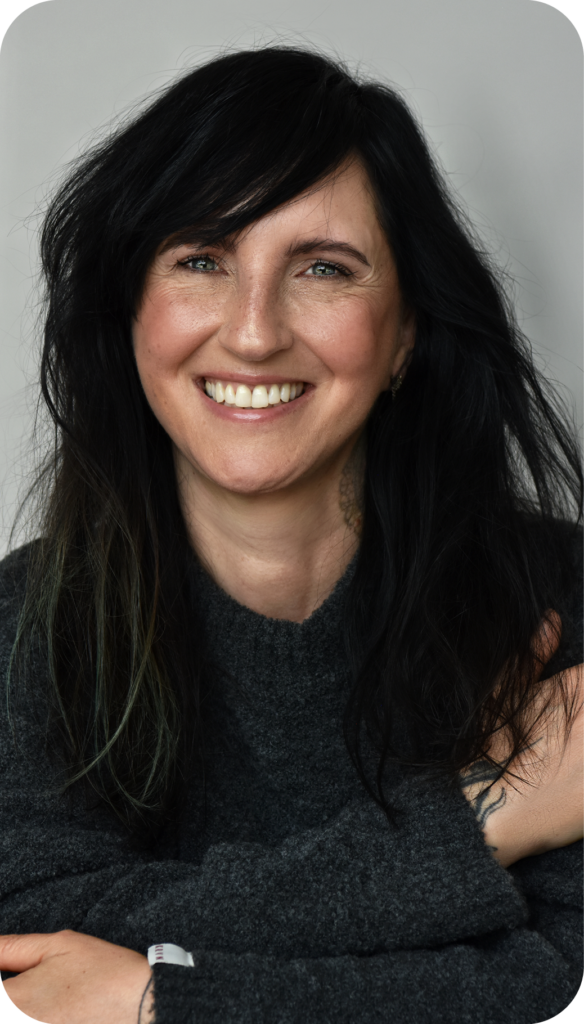
I have lived with two languages and two cultures my whole life — I work in both English and German.
How our own stories shape the way we are with babies and children — that is where all of my work with parents and children begins.
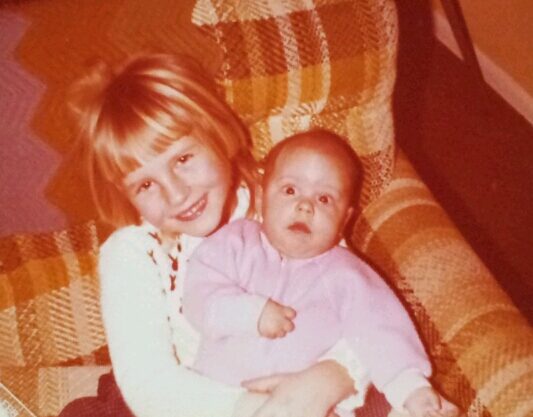
My mother was American, from Syracuse; my father is from Salzburg; they met in a hospital in Cleveland — a doctor and a nurse, falling for each other over the work of looking after people while at the same time being very intellectual and totally into the self-help movement. I’m the middle of five, raised in part by my oldest sister, who has been an elementary teacher her whole adult life.
I was born in Salzburg and lived there for my first four years, then New York state and lastly the Detroit suburbs. I have 10 nieces and nephews and caring for children was a huge part of me long before it was ever my profession. My brothers and sisters live in Michigan and Pennsylvania, and we’re still close despite the ocean between us.
I came back to Austria as a young woman and, for a while, felt very lost — an English native speaker in Europe, relearning German, between worlds, not quite feeling at home. That disorientation, I understand now, was what most people go through when they move to a new country.
Today I feel comfortable in many cultures, and I work with families living in that same in-between. Even though having my own children wasn’t in the cards for me, I feel completely fulfilled working with parents and children. I have had the joy to be a part of many children’s early lives. I have always endeavored to make things easier for parents, no matter what role I was currently in, through my integrated way of seeing life and parenting.
Most people in my field talk about three in the morning. In my experience, the night isn’t the hardest part. It is getting through the day — being tired like a zombie and feeling guilty for not having more energy to take better care of the baby and myself. Little ones are so beautiful and precious, and there is something almost sacred in the forced deceleration they ask of you. But you also give up your former lifestyle and push your needs to the side, for quite a long while, to do this extremely challenging and profound task. Working in private households for the last 9 years exposed me to many different family settings and values, where I was also challenged to integrate caring for a small child and respecting and supporting the wishes and values of the parents in an intense way.
This is who I love working with and can relate to the most: English-speaking and international families — personally in Munich and Salzburg, but also online across Germany, Austria, and all of Europe. Expats and parents coming to Europe for their careers, or because they both originally come from two different countries. Often my clients are in their 30s and 40s, parents who waited a long time for this baby or toddler, who want to do their very best. Often they wanted this so much that one can feel so guilty to admit how hard it is. You don’t have to pretend with me. Nobody who’s doing this 24/7, alongside everything else, would call it easy. Sometimes the parents I work with are pretty overwhelmed. Often, admittedly, they have had little prior experience with children. Intellectual skills are great, but they are not necessarily helping the crying baby or the boundary-testing toddler in your arms at the moment.
And if your baby cries and struggles and every check says nothing is medically wrong — that, too, is work I know closely. Medically fine — and yet definitely not okay — is a real place. I have sat in it with many families. Sometimes a simple breastfeeding issue can start the worry and overwhelm — most of the time in our modern day, it is a string of events and seeming causes.
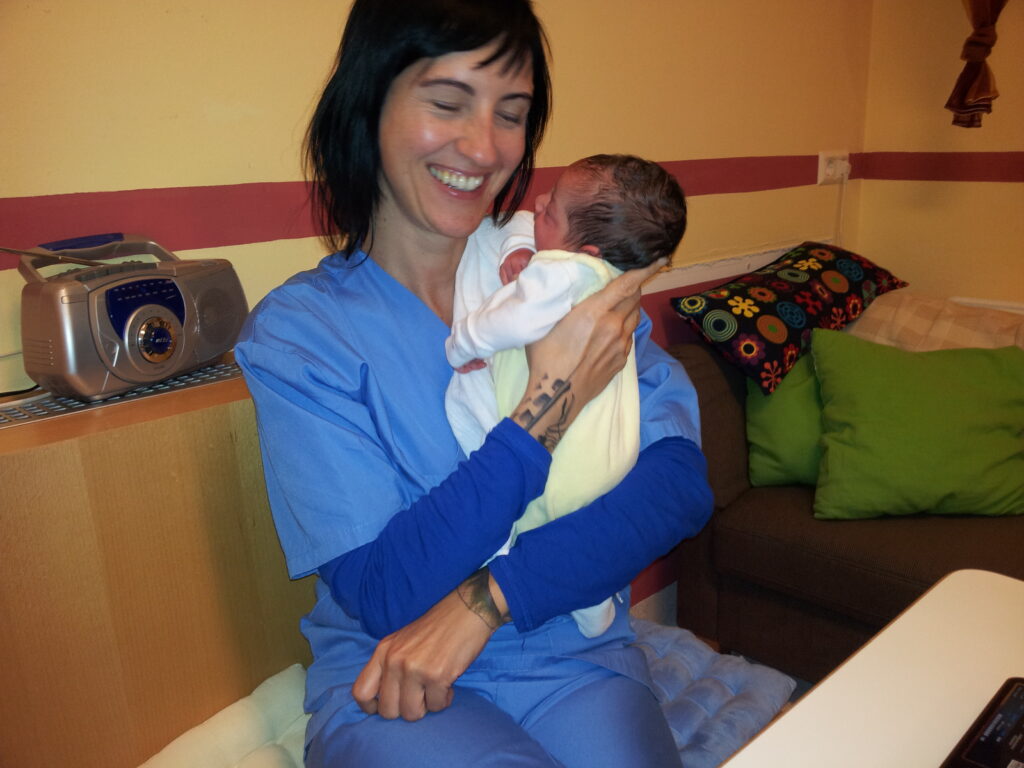
The early years of a person’s life lay something down that they carry all their lives — in German we say “Prägung,” a kind of early imprinting or environmental conditioning. Accompanying families in this tender stage has never felt like a small job to me. It is my soul work, and the reason I do this — my small way of making the world a little better and easing some suffering.
I learned the heart of how I work on twelve-hour day and night shifts in a maternity ward — a smaller hospital, a full ward of brand-new mothers with their newborns. As I like to say, a lot of people just think about getting through the birth… but it goes right on without a break afterwards. The newborn — so tiny and vulnerable, yet so resilient, showing us directly the power of nature. And the mothers… so strong and capable, taking on their new roles despite and because of human biology and survival instincts.
The easiest help is to take over. I mean this as a night nurse and as a nanny. Some very well-meaning nurses would insist on taking the baby away so the mother could sleep and sometimes that is the best decision; a mother past her limit needs rest, and allowing her some sleep is important. But there is a line: does this help leave her more able, or less? How does she feel about it? Will she even be able to rest or sleep? Take the baby too readily, and you may be giving her the message that she is not good enough. In an ideal world, you would stay beside her while she finds her own way, and she learns in small and big steps how to do it her way. So, in my consultations, I don’t take over, and I don’t stand back. I accompany in a steady, competent, and supportive way.
For a long time I learned and focused only on the practical level — this is what all of us nurses have to do starting out, learning the ropes. In the beginning you cling to the rules — you don’t yet know what matters and what doesn’t, so you follow the structure. The real skill, and what took me years, is learning to read the mother and child in front of you and adapt to them, instead of doing something just because it’s always been done that way. When I felt confident enough at maternity and infant care I also realized that the deeper issues underneath what was presenting weren’t getting addressed. In a hospital setting it is just not feasible, not in modern busy medical practice. The medical industry is so evolved and wonderful, but there just isn’t much room for prevention, deeper work and integration due to time, funding and logistics. The focus is on treating symptoms and not the underlying origins of problems or symptoms. When I tried to keep my nursing work as short and concise as possible, sure it would often help on the surface, but not always and not always sustainably. So I started looking deeper and broader. Not only have I learned that all stories are unique and have an influence on our whole lives with children — I can also say what few others can: Not only have i worked in a medical and official setting, I’ve also worked inside families, in their homes in multiple countries. In Austria, the United States, France, Monaco, Switzerland, Germany, and Dubai. More than twenty years of seeing behind the scenes has helped me great understanding, empathy and my own hard-won resilience at the same time.
It is not one-size-fits-all, because no two families are the same. Of course, babies will always be babies and there are patterns and techniques and strategies that work very well, but so much more is possible just by slowing down and listening, integrating body and mind while keeping the big picture in sight. Context is so important!
When I say my approach to sleep and parenting is integrated, I mean something specific: five areas, each given its own voice, none crowded out by the loudest. In my course, each one has its own space.
Depth like this can’t be rushed, which is why my program is built the way it is:
The internet is full of quick patches that ask you to pick a side — strict or soft, schedule or surrender. I go the middle, broad and deep way: down into the biology of what is happening in your little one’s system, and out into the whole family picture, and then into real life.
When you understand what is going on, the anxiety settles, you can listen to inner guidance better, and the next step usually becomes clear. You don’t need to get it right. You get to aligned — with a balance that can be felt.
Of course, I thoroughly enjoy working with parents in private coaching. Being able to work on a deeply individual, focused level is the highest level of accompaniment and guidance I can offer.
| Qualification & experience | What it means in practice |
|---|---|
| Dipl. Gesundheits- und Krankenschwester, Dipl. Kinder- und Jugendlichenpflegerin | registered general and pediatric nurse in Austria and across Europe (a qualification I take very seriously, with an emphasis on preventive care). |
| 7 years on the integrated postpartum ward in Hallein, Austria | mothers and babies stayed together, with optional family rooms. |
| IBCLC — International Board Certified Lactation Consultant (since 2009) | the most advanced clinical credential in lactation, and the foundation under everything I do with feeding, from the first latch to weaning. |
| Assistant in the private practice of André Golser for 3 years | patient care and organization, plus one-on-one support for families with breastfeeding and lactation, feeding, introducing solids and baby-led weaning, and sleep issues. The practice specializes in infants and the early years. |
| Elternberatung Land Salzburg (3 years) | a weekly open consultation where parents could come with any question, across the full range of early-parenting concerns. |
| Leading groups for English-speaking parents and expats in Salzburg | breastfeeding, baby-led weaning how-tos, and general parenting topics. |
| Trained in hypnosis for children and adults | deep relaxation, loving suggestion, and stories can work magic in behavior change. |
| Craniosacral Psychodynamics (CranioSacrale Psychodynamik) by Michael Mokrus | a body- and mind-oriented training built on craniosacral biodynamics, supporting integration and the healing of emotional and physical symptoms in adults. |
| Ressourcen- und Körperorientierte Krisenbegleitung für Baby, Kleinkind und Familie by Paula Diederichs | body-oriented, co-regulating accompaniment for when conception, pregnancy, birth, or the early years don’t go as hoped — including inconsolable, colicky babies (Schreibabys) and sleep or feeding difficulties. |
| Harmonische Babymassage nach Bruno Walter | sensory infant massage rooted in the traditional Indian baby massage brought to Europe by Frédérick Leboyer, engaging all the senses and strengthening the bond between parent and child. |
| Professional maternity nurse and nanny in private households | for the last 9 years with international families in different countries, including extensive travel. Families based in Austria, the United States, France, Monaco, Switzerland, Germany, and Dubai. |
| Expert parent support | across breastfeeding and lactation, introducing solids (including baby-led weaning), and baby and toddler sleep — from birth onward, and often before. Over the years this has spanned hospitals, private practice, and my own self-employed work through house visits and online. |
I’m a member of ELACTA and Rückhalt Österreich, and have offered courses through Birthday Salzburg.
Currently I live in Munich, Germany and Salzburg, Austria. For the last 10 years I have run my business helping parents in their homes or remotely under Eltern-Kind-Beratung.com, which is still my portal for German-speaking families.
I am also very into visual art and music, a lifelong reader of science (especially astrophysics), philosophy and psychology, and someone who keeps a steady yoga and meditation practice — the ground the rest stands on. I feel deeply connected to nature and love doing outdoor activities like hiking and skiing, and living in a way that does as little harm as possible to the planet and life on it.
You cannot help another person find calm from an empty, jangled place; it starts with the one holding the space. Wanting a full life isn’t separate from this work. It is part of how I do it well. I try my best to live congruently, listening to my body, heart, and mind — and the stillness underneath all of that.
If you’re tired and unsure and a long way from where you started, you’re exactly who I do this for and I would love to hold your hand for a while.